2016 Junior Camp and Contest Summary

This summer, we held the first of what we hope is a long series of events loosely based off of recreating the experience of a junior world championship in the US. With this in mind, we aimed to fund ten pilots for a week of flying. For some, it would be their first contest, others came to fly with mentors in the two-seat class.

July 9, Practice day 1.

The soaring day was relatively good with single-seat pilots doing practice flights and the beginning of the mentored two-seat flights in the TSA duo. The soaring was great and the atmosphere was plenty un-stable!
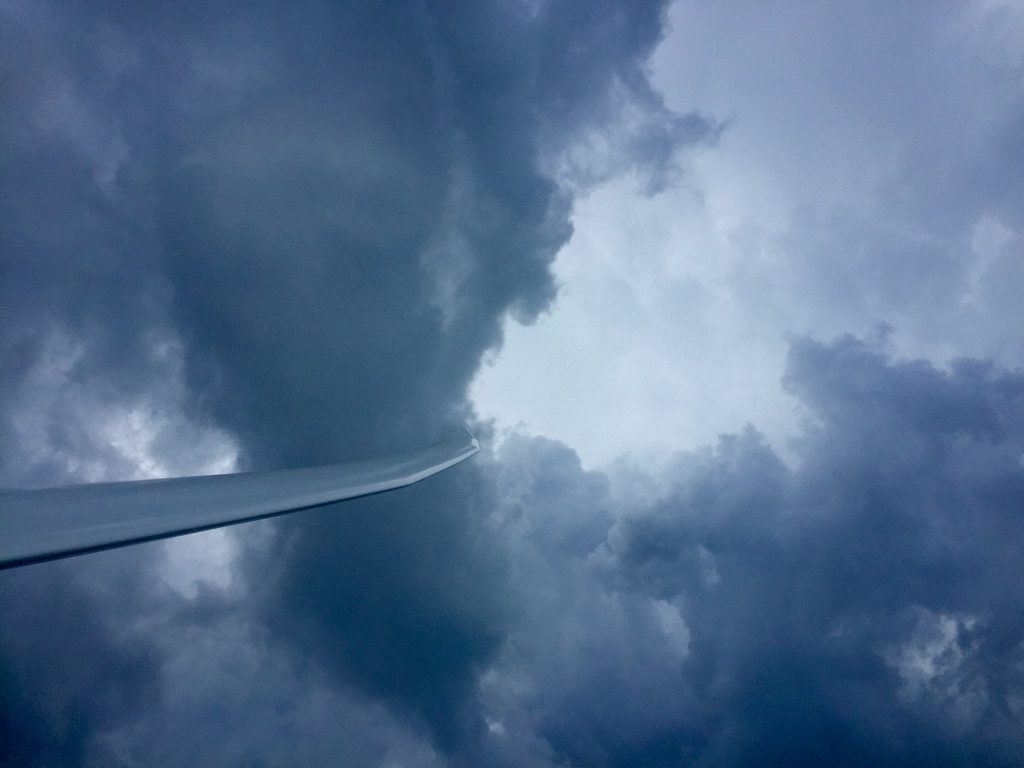
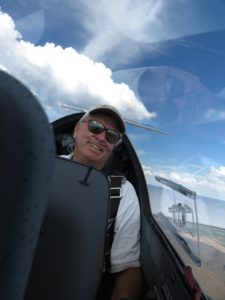
From David McMaster
TSA Duo with David McMaster and Mike Westbrook

fullsizerender1

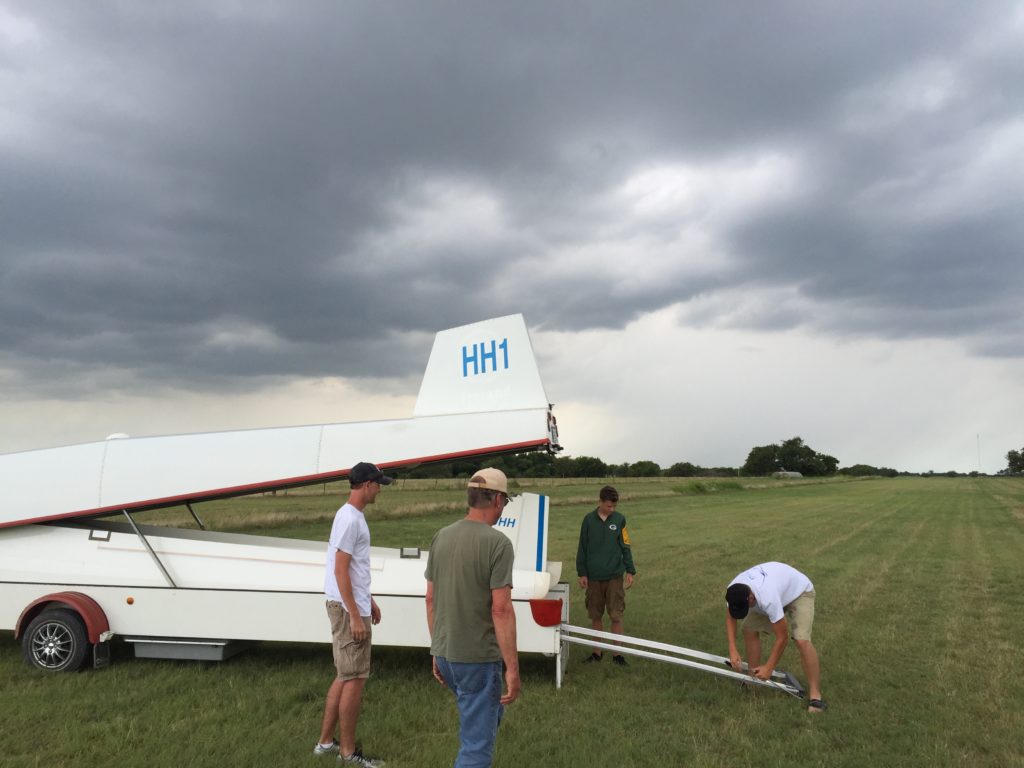
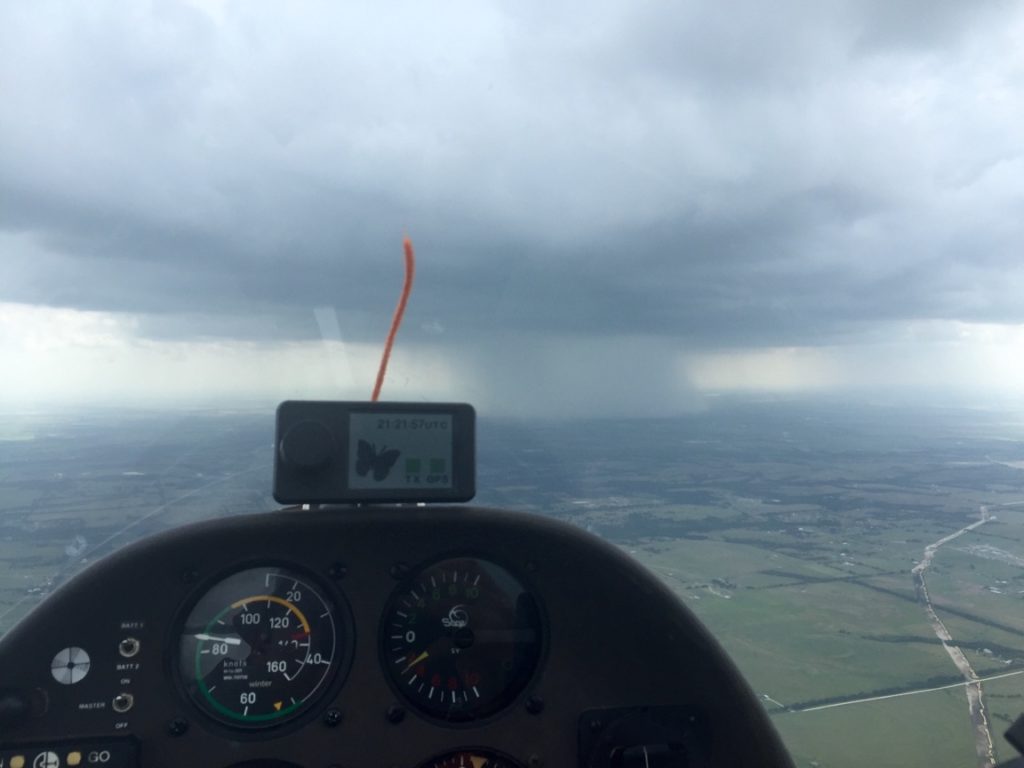
After everyone was back, things got wet…. fast. We got most of the gliders apart but had to wait out a few minutes of the rain.
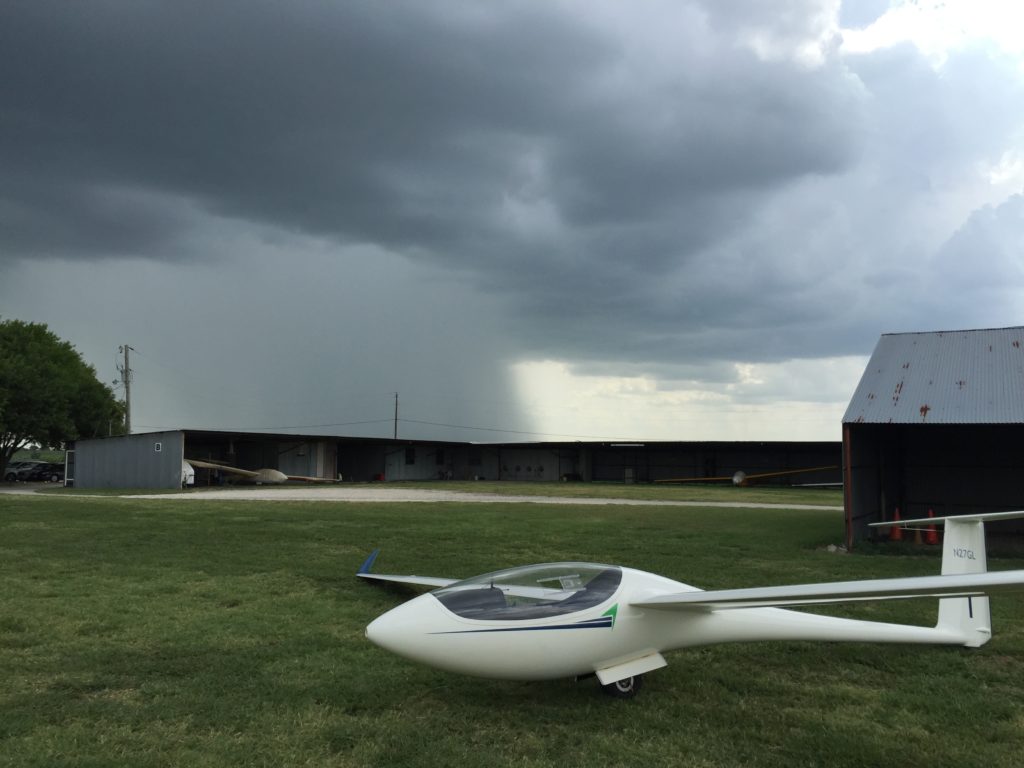
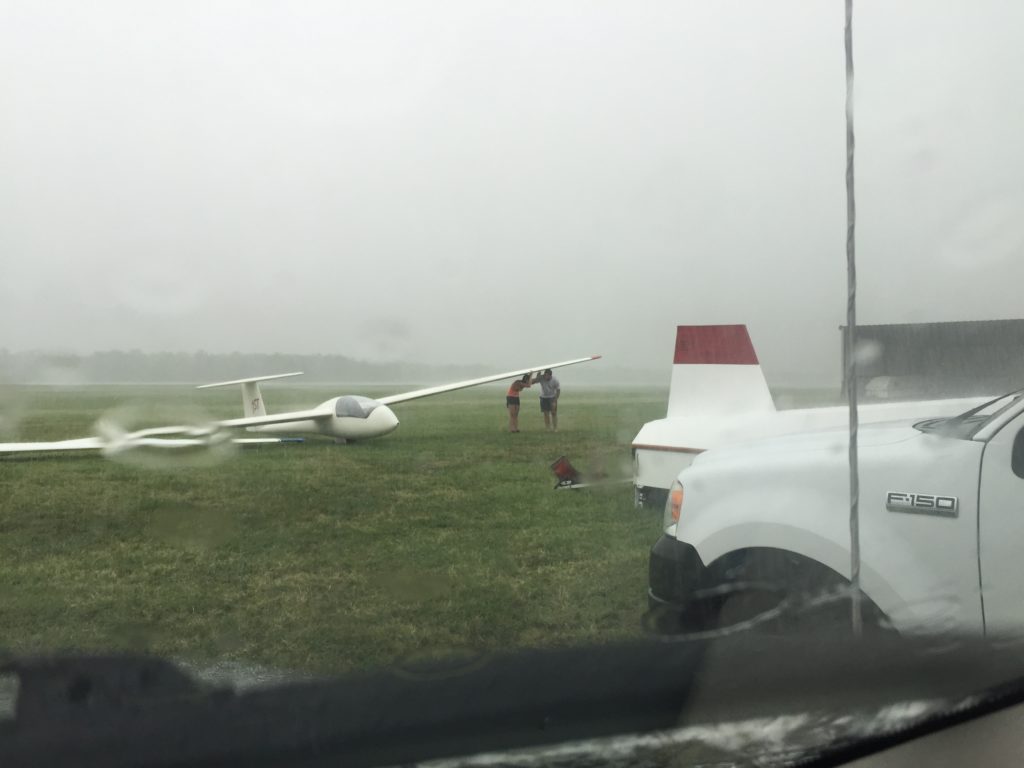
I wonder why they landed?
It'll dry off...
It’ll dry off…

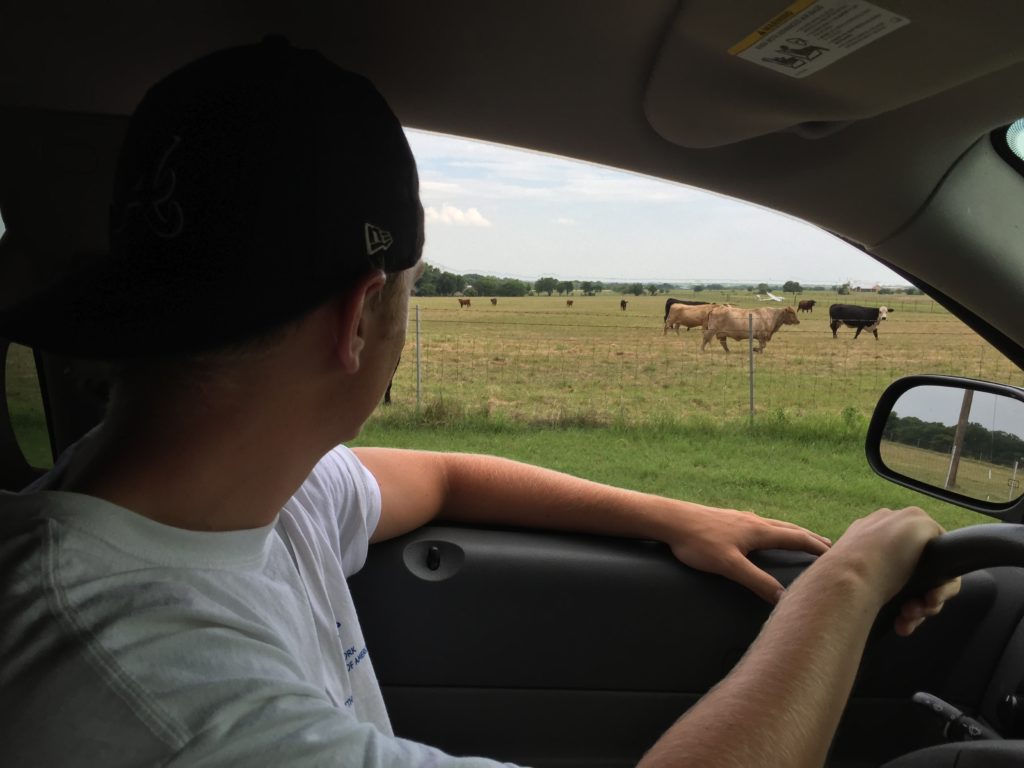
Once the storm passed, we headed out to pick up JT McMaster who had landed a few miles away.
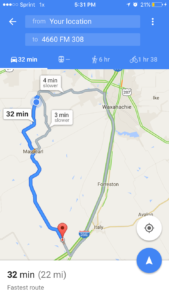
An easy trip
An easy trip


Can you spot the glider?
It was a quick retrieve and we didn't even get wet!
It was a quick retrieve at a local private airport and we didn’t even get wet!

The weather was weird, but everyone had a great time and we headed over to Waxahachie for dinner and to check-in to the hotel.

July 10, Practice day 2.

We knew the ground would be wet in places, but set a small task that would have everyone trying to make multiple practice starts and finishes. The idea was to practice good starts, turn point hits, and finishes all while avoiding (practice) penalties.
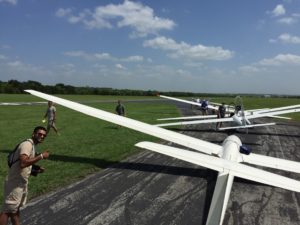
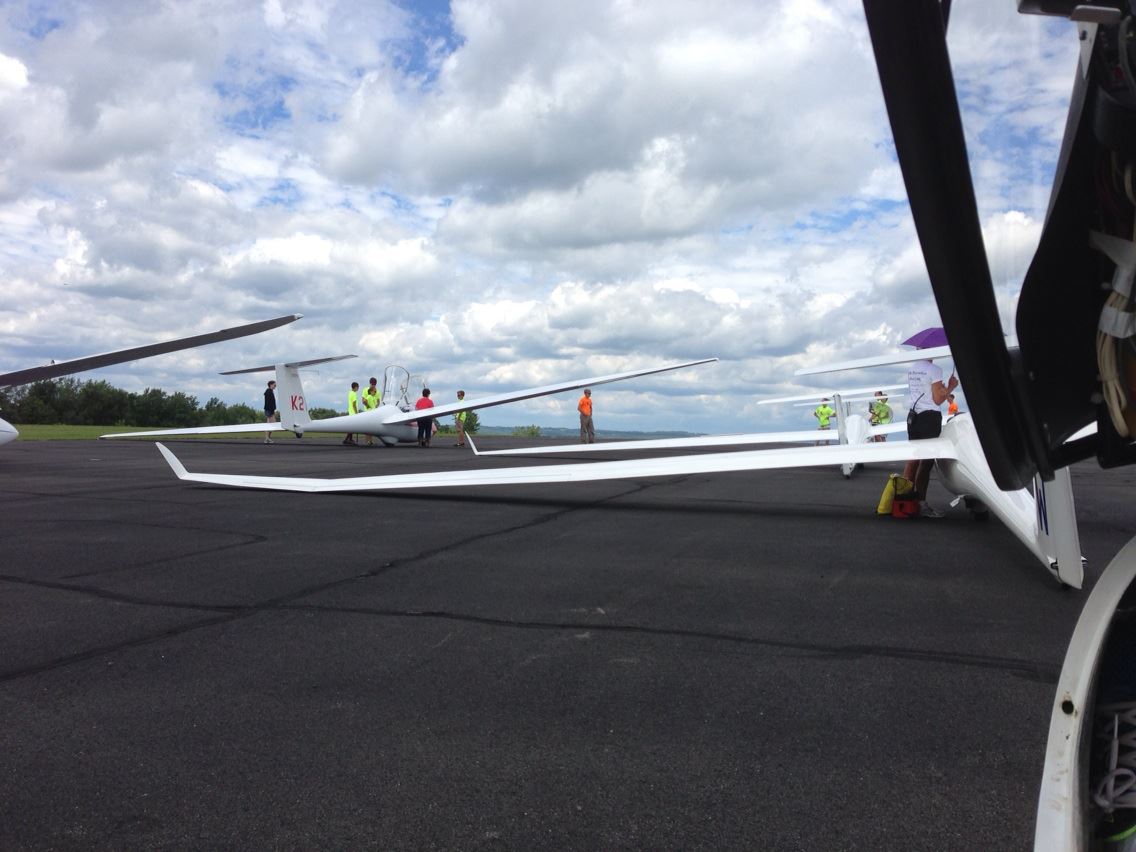
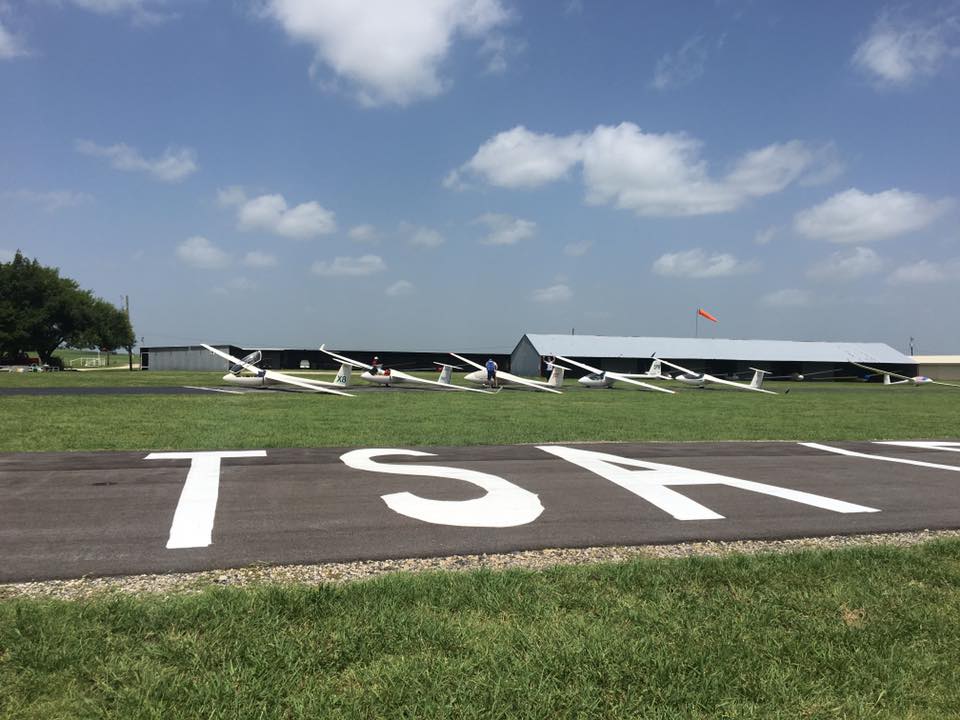
A promising look on the grid.
A promising view on the grid.

While it wasn’t 10 kts to 10,000 ft, we launched the fleet and everyone stuck! Most pilots completed the mini-task and several flew “real” XC tasks.

July 11, Contest day 1.

Today… things get real. For the pilots in single seat class, this event was a sports class regional and that meant that there would be a ranking at the end of the event.

We set a task that would accommodate the range of performance, experience, and weather and gridded for launch.
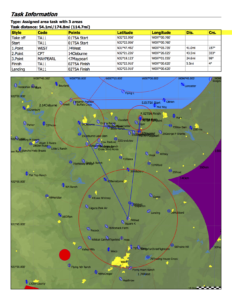
Day 1 task sheet
Day 1 task sheet


The main single-seat grid, ready to go!


The winds and moisture kept ground temps cool and we couldn’t get above the 3,000 AGL minimum for a fair task. Everyone flew 2+ hours and the thermalling practice was incredible.

After flying, the group got together for dinner under the pavilion and got shirts from JWGC 2015 Team USA.
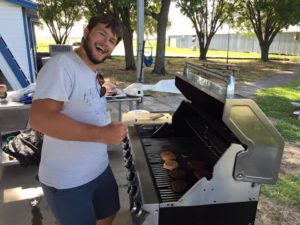
Powel makes dinner!
Powel makes dinner!

After dinner, the flying continued with some lessons on flying two-line stunt kites and just generally hanging out.
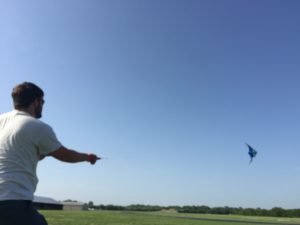
Powell flying a stunt kite
What else would we do at a flying event but fly things?

July 12, Contest day 2.

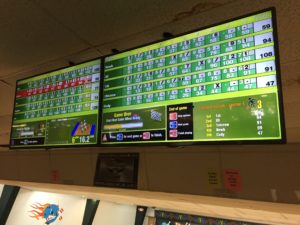
Well, sort-of. After the Dallas shootings, President Obama came to the Dallas area, to speak. The presidential TFR just barely encloses TSA but it shut down ops for the day. After some half-joking searches for other airports to move operations to, we called the day off and everyone went off to visit the local area. At the end of the day, we set a new task – knock the most pins over.
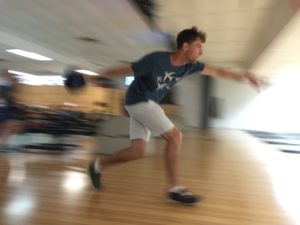
JT bowling hard.
JT bowling hard.


img_7672
You won’t find these scores on the SSA site

July 13, Contest day 3.

With the TFR expired and the airspace free, we got back to business and set a nice triangle.
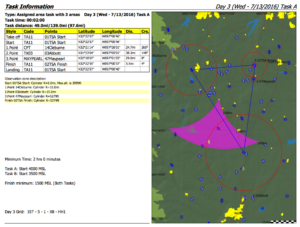
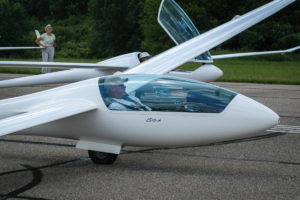
It’s important to remember that all gliders are welcome here!
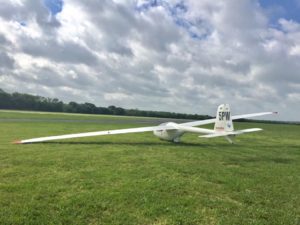
The "Peewee" out in the early morning.
The “Peewee” out in the early morning.


So, we gridded and launched!

Ryan McMaster (1) ready to roll

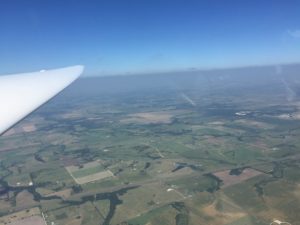
While it was weak for the first half of the flight and few re-lights were involved across the board, the sky seemed to “switch on” later in the afternoon and off we went! Everyone who went on course completed the task and had a good finish. We saw good climbs to ~5000 AGL and zipped around the task before the day ended.
On task!
On task!


Formation final glides are pretty cool!

July 14, Contest day 4.

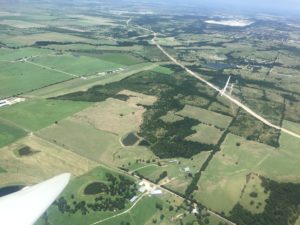
Day 4 seemed to have a pretty similar airmass to the previous day and resulted in most everyone sticking and getting some good flights in.
Climbing with Ryan McMaster.


Heading back toward the airport.


It's really a pretty nice day!
It’s really a pretty nice day!

July 15, Contest day 5.

Well… this is it… the end of our contest. We started the day with a grid squat while we waited for temperatures to rise…
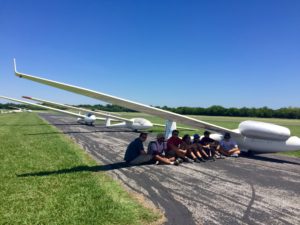
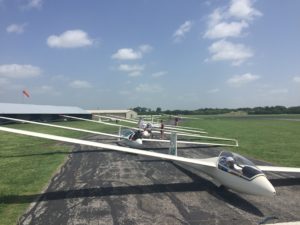
Grid squatting!
Grid squatting!


All gridded to go.
All gridded to go.

Once hints of lift started, we launched the fleet!
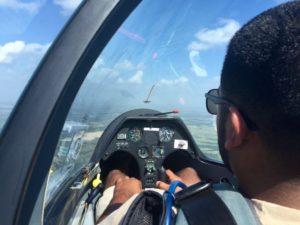
James flying with US Team member Mike Westbrook.

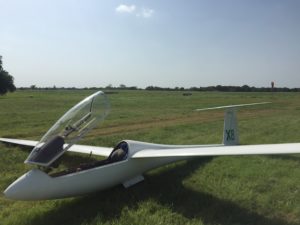
After a few hours of good flying, I (X8) decided to keep going as the lift softened and see how much I could get out of the day. Well… I found the edge and headed for a nice private grass airport. Someone was cutting the grass on the edge and after I stopped, came over with a bottle of cold water and a ride back to the main barn.
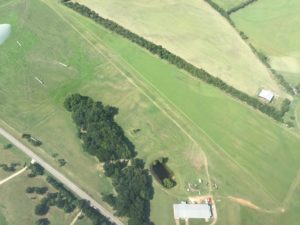
Not a bad place to "land out".
Not a bad place to “land out”.

While the field owner doesn’t do much flying anymore, he keeps the field nicely cut and shared stories of the AN-2 (among other things) that he used to fly there.
There's always a wisp watching over your field...
There’s always a CU watching over your field…

It was an easy/quick retrieve from TSA and after dropping the glider, we headed for a group dinner to celebrate a safe week with good flying.
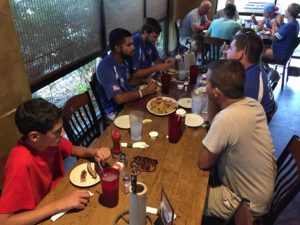
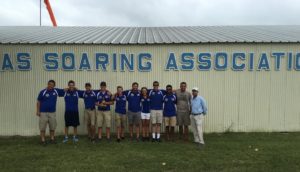
End of contest dinner!
End of contest dinner! (A few people are not pictured here)


The whole junior group together!

Oh…. and the sky on the way home the next morning was pretty nice…
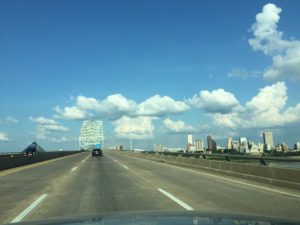
The sky taunting as we head home.


The weather wasn’t quite what we had hoped for this year but we flew most of the scheduled days (I flew ~15 hrs over the week) and even managed to get some XC tasks. In the free time, we had discussions on XC flying and debriefed the flights from the day. The two-seat pilots were able to learn the basics of stretching their legs and the single seat pilots got some amazing thermalling practice and a lesson in the value of persistence. We had a good, safe, fun week and I’m looking forward to seeing everyone (and more!) at the 2017 Contest: http://www.ssa.org/Contests?cid=2374.


Of course, this event could not have happened without some incredible support from the Rick Walters Scholarship and Soaring Society of America. For those who don’t know, Rick Walters was a talented member of the sailplane racing community and US Team Committee member who was dedicated to soaring. He was involved in a tragic bicycle accident but his memory will continue to live on thanks to his many friends in the soaring community.
2017 Junior Camp and Contest Announcement

After a great inaugural 2016 event, the 2017 US Junior Camp and Contest (JRCC) is GO!

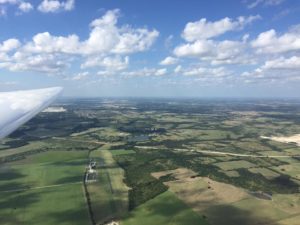
The 2017 event will be hosted by the SSA Youth/Junior Committee at Harris Hill in Elmira, NY on July 1-8. Harris Hill is an incredibly unique flying site. Situated ~700 feet above the valley below, it offers a beautiful view on takeoff and some great east coast soaring weather. It’s also a good, place to learn XC techniques. If you miscalculate a final glide, you have 700 ft of margin to the auxiliary landing field below.


The grid of Harris Hill’s Region 3 Contest
A view of the valley below from the top of the hill
A view of the airport while flying the ridge

Though the weather tends to be good, every contest has a few challenging days. The fields in the soaring task area are still very landable.

The fields are pretty awesome too

So… how does the event work?

The event is separated into two groups: single seat (“sports” as it’s known on the SSA site) and two seat. The only requirement to fly in either class is that you will be 25 years old our younger on the first event day (defined as a “Junior”). If you will be over 25 but interested in participating, you are able to register and fly in Region 3 during the same week (Register at: http://www.ssa.org/Contests?cid=2379) and participate in the JRCC lectures.

  1. Single seat is intended for pilots who have some XC experience (either a silver badge or OLC 50km flight) and are interested in flying in an SSA sanctioned regional contest. The single seat classes is ranked and provides a score that can be used to enter national soaring events.
  2. Two seat class is intended for juniors new to soaring, student pilots, licensed pilots, CFI-Gs, etc. who do not have sufficient cross country soaring experience, confidence, or the ability to borrow a glider for the single-seat class. In two seat class, you will fly with an experienced mentor pilot who will coach you as you fly a cross country task. This mentor pilot will keep you out of trouble while sharing their racing experience.

Each day will begin with a pilots meeting where everyone will get a briefing on the weather and operations notes. After this meeting, we will give a short lecture on a cross country soaring topic and have a group discussion. The two-seat juniors will then be assigned their mentor for the day and the single-seat pilots will begin preparing to fly.

Lunch will be provided (paid for and prepared) by the JRCC and served in the Harris Hill clubhouse. Glider launches will begin at approximately 12:30 PM each day. The single-seat and two-seat flights will nominally be 2-3 hours. Depending on the number of two-seat gliders and pilots, each two-seat pilot will expect to fly at best, every day and at worst every-other day. On the two-seat pilot’s off days, we will have Condor (a glider racing simulator) setup for them to practice race techniques.

After flying is done for the day, there will be a de-brief for everyone to discuss their flights over dinner (also provided by the JRCC). Throughout the week, there will be several social events and a few soaring movie nights. Of course, there is also a campfire…

The 2017 JRCC Head Coach (Tim Welles) discovering his glider covered in task sheets during Region 3

The JRCC has reserved the use of the Harris Hill youth camp and will have the camp site and shower houses available right next to the airport. As the event becomes closer, we will coordinate tents, sleeping bags, etc to make sure that everyone has a comfortable place to sleep and can make arrangements if you do not have the ability to bring them.

The entry cost for the event covers all tows/flight fees, the campground use fees, and all meals through the week. It is currently set at $200 for the event though there may be a refund at the end depending on the success of fundraising efforts.

You can register for the event at: http://www.ssa.org/Contests?cid=2379 If you are bringing a glider to fly in single seat (“sports”) class, please fill it out accurately. If you are flying in two-seat class, please fill it out as completely as possible and put “N/A” in any fields that are related to the glider.

If you have any questions or suggestions about the event, need help with anything, would like to help host or fund the event, or anything else… please do not hesitate to reach out here: http://juniors.ssa.org/home/how-to-help/


Thanks for reading, I look forward to seeing you there!

JP


03/04/17 Ridge Soaring Expedition


When I first saw Tom as I stepped out of the bunkhouse, he grudgingly mumbled, “This is a special kind of insanity!” I guess he’s right. The frigid weather and the logistical monstrosity it was to make this day happen certainly qualify. But we had a spectacular ridge day which made it completely worth it.

Saturday was to set up with a solid back-door coldfront, though with NW winds too strong to fly out of Blairstown. With the Spring season here and a big day to be had, I scrambled to find another place to fly. Once we established that it was possible to fly out of Ridge Soaring, we put the whole logistical apparatus into motion. Between towpilots, crew, gliderpilots, possible gliderpilots, and ACA board members, 25 people were directly involved in the planning, co-ordination and execution of this day. Thanks a million to everyone that made it happen!

So finally we’re getting ready to go at 9:45 am. The ridge is clearly working, though a little snow squall comes through. I am strapped in, completely relaxed and bantering with Phil. Through the slit between the canopy and the cockpit, I am watching Tom struggle to make the Scout start. Ten minutes later, he switches to the Pawnee. Ten minutes later, after a lot of consoling and possibly swearing, the prop kicks over and we have a towplane.

By the time we launch, the snow squall had passed, revealing nice flat-bottomed Cu above. I release on the ridge and make a short lap to establish how well it is working. 90-100 knots would do it and I am on my way South bound.

The front ridge is quite a bit different than Blue Mountain. As a whole, it is much less consistent lift-wise. Particularly as you get into Port Matilda/Tyrone, the lift is very spongy. I’ve had several sinking spells that sucked quite a bit of the energy out of the LS4. It seems to me that the instability and the proximity of the plateau made for sink and turbulence that made the ridge quite a bit less reliable than what I am normally used to. But nonetheless, it was solid enough to never be really worried about falling off, just enough to always be alert.

Going into Altoona Gap, I was a bit more brazen than was prudent. I floated up to 2,800ft and shot straight across. I got across a bit below ridge top, though level with most of Dunning Mountain. It was not exactly smart to get so excited so early into the flight and took this into account at Bedford Gap. Dunning Mountain is a great little ridge and I was driving along at 100 knots. This was my first time on it and it gets high marks!

Right as I got to the SW tip of Dunning Mountain, I shot up into a 7 knot thermal. Four turns later and I’m at 3800ft, plenty high enough to cross. The run down to Cumberland worked great. I floated up on half-pipe as the ridge band was working quite well up high and to make it easy to cross to the Knobblies. Looking out ahead, the air was turning an ominous blue. Onward we go to the low ridges after Cumberland, heading toward Keyser.

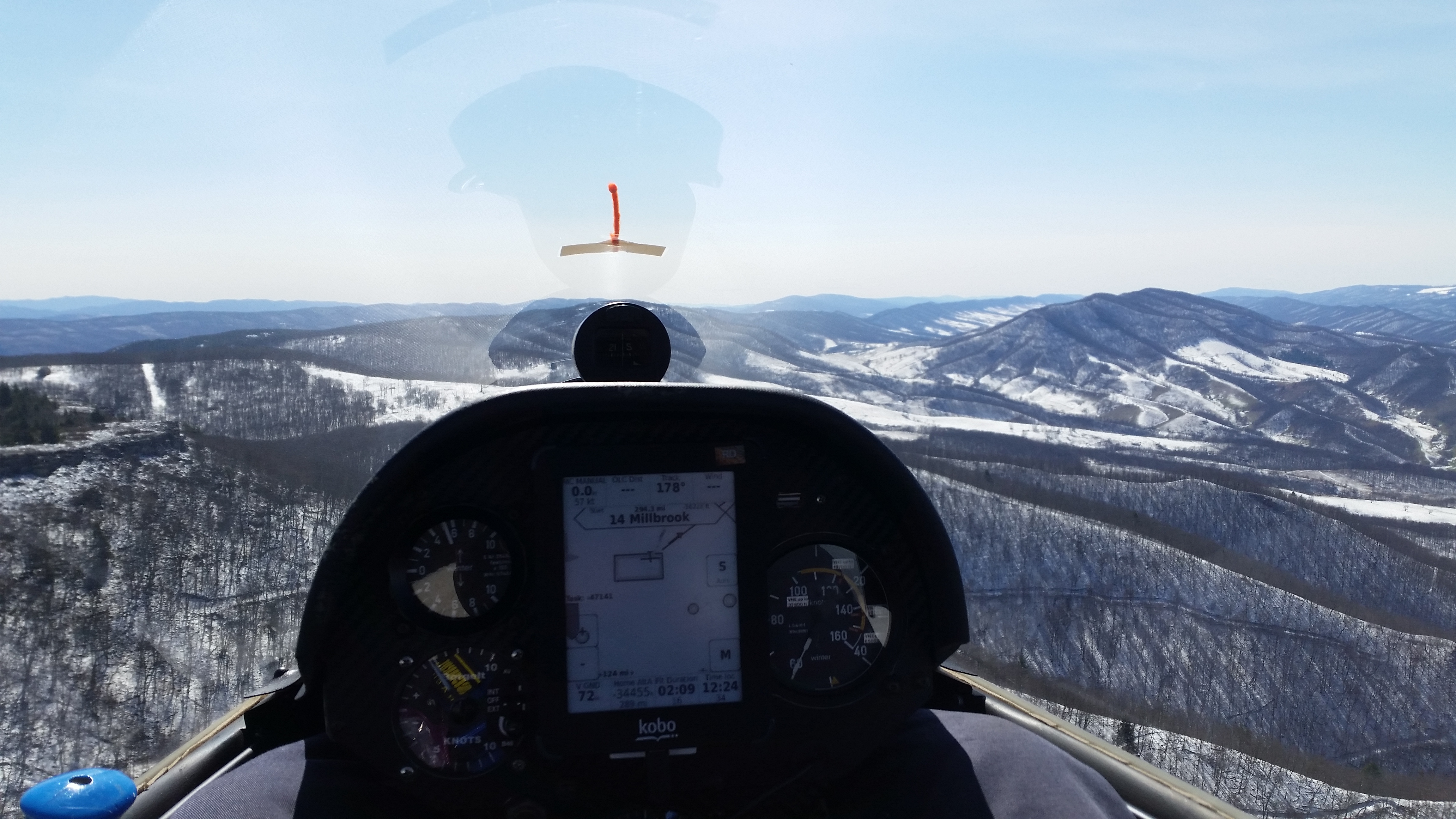
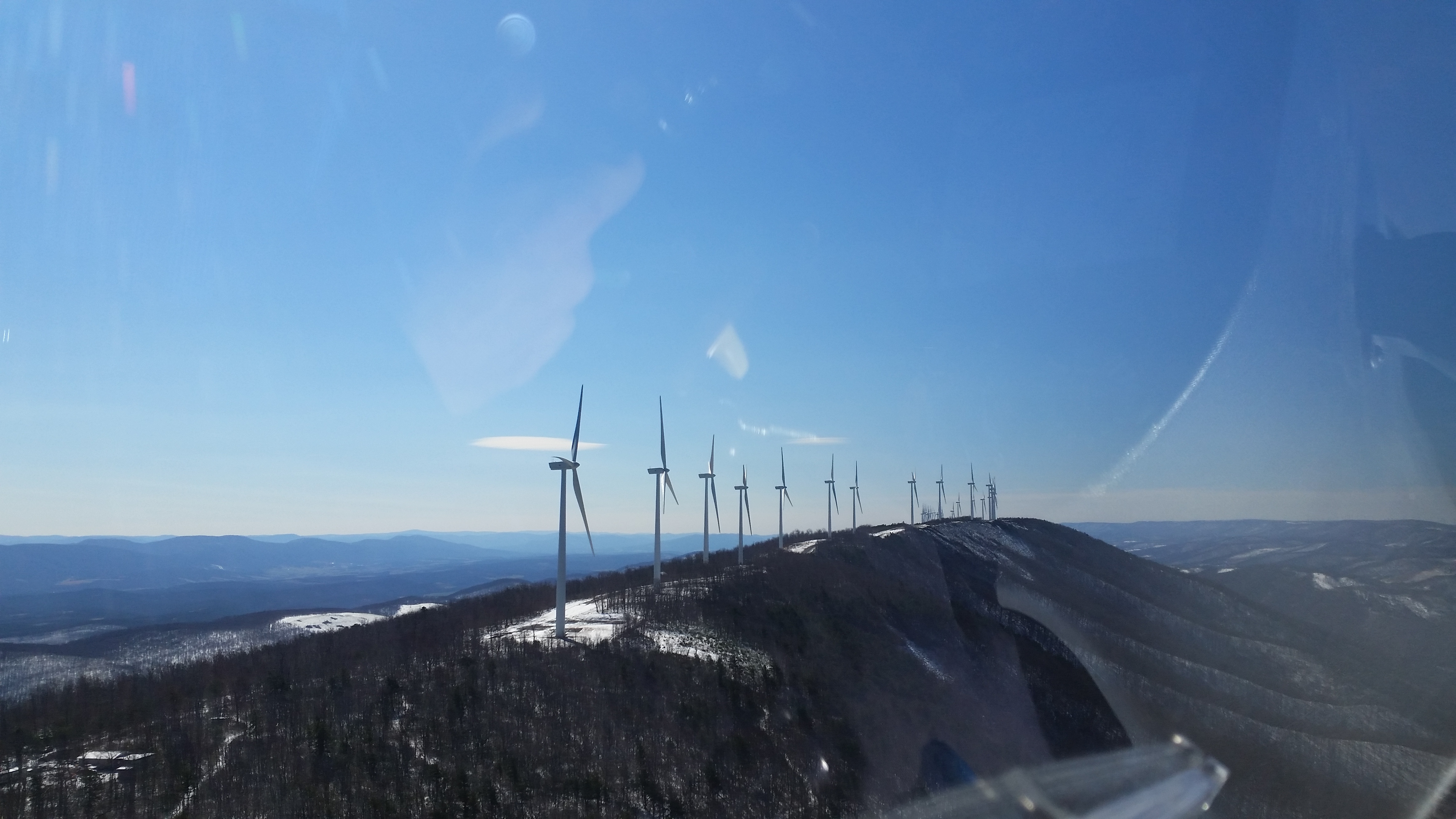
The Knobblies were as advertised: a pain in the butt. The ridge was not working that great, mostly a 65-70 knot deal, trying to pull as much energy out of every bit of air possible. The air was incredibly volatile. Seeing that I wanted to climb, when I would hit a nice strong surge, it was extremely tempting to turn. But most of them were little gusts or torn up bubbles that were shooting up through small bowls and it was fruitless to climb in them. Then there were the 300ft sinking spells. It was a bit nerve-wracking clawing from one knob to another, always mindful that the bottom can drop out and it would be necessary to go right back through the same sinking air if I was too low to make it. I worked hard to get to Scheer, the ridge with the windmills. Much to my chagrin, the windmills weren’t turning. I am not sure if they were simply down for maintenance, but the ridge wasn’t exactly working that great there either. I managed to finally float up on it and as I got higher, the ridge got better. At the end of it, I caught an honest thermal up to 4500ft and this was enough to traverse the next section, toward Petersburg.

I got back down on the ridge near Hopewell Gap. Now I was tiptoeing my way up the mountain as the wind was not strong enough to simply heave me up it. I quickly found that the ridge was working considerably better 300-400ft above it and was working hard to get into that nice band. With the ridge eeking uphill, it was somewhat tough to do that. Nonetheless, by the time I was at Snowy Mountain, I was now quite well established, cruising along at an honest 85-90 knots. The wind was not strong, but that band was really honest. It took some internal debate to keep going beyond Snowy. The ridge was ever so-slowly getting lower and the sky was the deadest blue-looking I had ever seen. There’s different kinds of blue. When it has that crisp, deep blue to it, you expect thermals. This one was the misty, still looking blue.
But flying beyond Snowy, I was maintaining 4300ft and solidly cruising along. My objective was Mountain Grove and I figured that so long as I am able to keep this speed up and more or less maintain my altitude, I can keep going. It was only 12:30… let’s go for it.

Most of the way, the ridge was more or less the same height MSL, though beyond Monterey, it starts following the valley downhill. Now I start to meticulously maintain my altitude, taking an occasional turn here or there. This nice band worked for me heading this way, but with the slight tailwind component and uphill on the way back, I had to be very careful not to fall down onto the ridge. I floated into Mountain Grove, lost some altitude and turned back. This was as far as I could go SW and now I had to work hard to get back to the better air NE.

Luckily the ridge was honest and I established myself back in the nice band heading toward Snowy. It was a really beautiful run. There was just a bit of snow on the ground and the mountains are extremely pronounced in this landscape. It’s quite different from the ridges I normally fly.

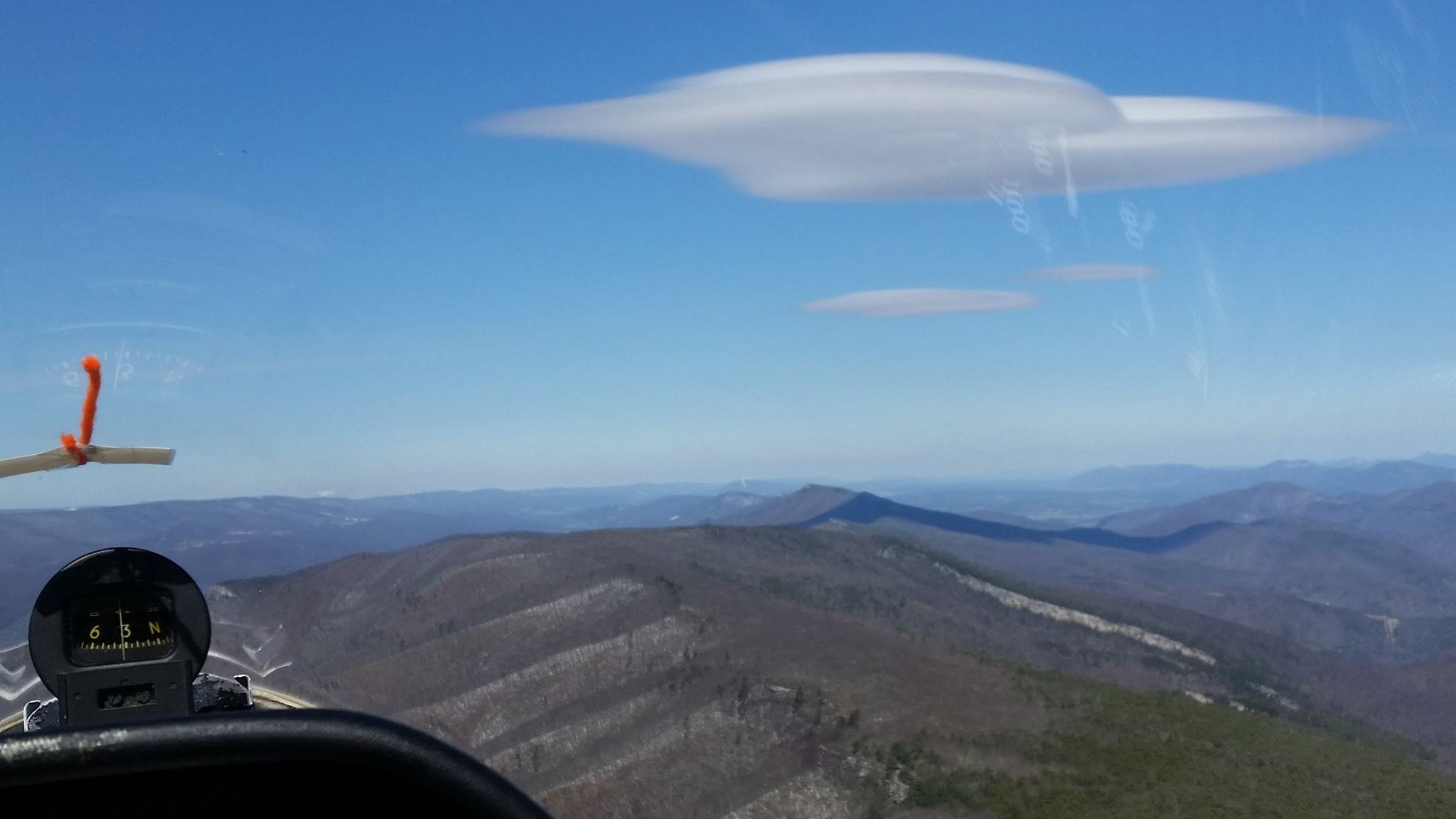
Getting back toward Petersburg, I saw several nice looking lenticular clouds. Seeing that I had to climb up to go back across the Knobblies, this was a good opportunity to play around and see if I could get into the wave. I tried to get into it on the leading edge of the lenticular, though to no avail. I had a nice climb up to 7500ft, though the wind here was only 7 knots. The transition point into the wave was going to be considerably higher and since I had plenty of height to head across the Knobblies, I kept going.

With the wind having weakened considerably, I switched to thermal mode. This was not particularly concerning as the thermals were really strong; some averaging 6-7 knots. I found good air over the Knobblies, possibly weak wave induced. I stayed in this good air all the way up through the half-pipe, where I finally transitioned back to ridge flying.

I decided to head back via the front ridge rather than the Evitts/Tussey route since I did not have a working radio. The handheld was not transmitting and it would not be proper to head through the State college Delta. Nonetheless, the thermals were great and the transitions quite benign. It was fun to fly Dunning Mountain again.
Across at Altoona, I decided to drive up toward Williamsport. The wind was about 310-320 degrees, so the Northerly facing ridges should work reliably. Milesburg was not a problem and the ridge was solid through Lockhaven. This area has been nerve-wracking to me as the three times I ventured up here in the past, I landed out. The day was clearly conducive for this area to work and it was about time to prove to myself that these ridges work fine.

As predicted, the run to Williamsport was just fine, though heading back SW bound toward Ridge Soaring was a bit interesting. With the sun setting and lighting up the ridge in a blinding light, it made it quite difficult to see the mountain. I stayed higher and put my cap on, right against my sunglasses, which helped somewhat. Nonetheless, I found myself zigging and zagging to stay in the ridge band, occasionally drifting out of it as the ridge slowly curved to a more Southerly direction. Finally, one hour before sunset, I landed. My feet were frozen, though my body was totally fine.

All five of us (Rob Dunning, Philip Chidekel, John Bird, Claudio Abreu and myself) had a great day. John and Phil made their first ridge cross countries, claiming a handful of state records. Phil also will get a Gold Distance and Century III award out of it!

Again, thanks a million to everyone who helped make this day happen. Huge thanks to Tom and Doris for towing us on such a miserably cold day. And as always, thanks to Aero Club Albatross and the ACA board for letting me take this beautiful LS-4 and do such exciting stuff with it. I am very lucky to be part of such an awesome club!

http://www.onlinecontest.org/olc-2.0/gliding/flightinfo.html?flightId=-1661076999